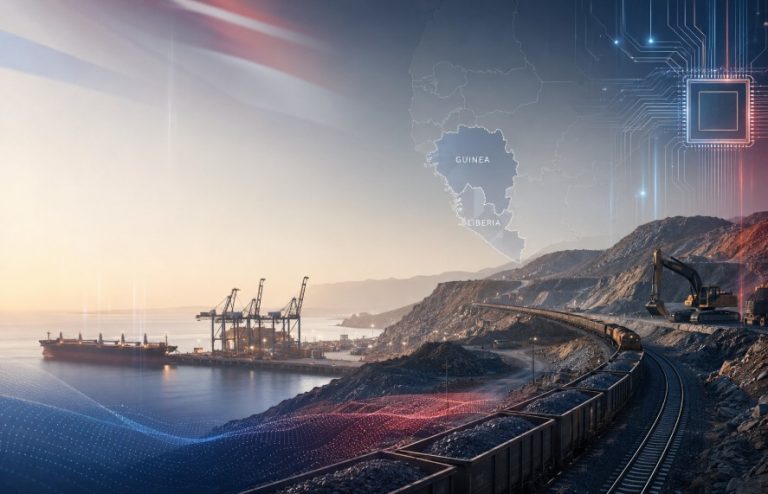
The renewed momentum surrounding the Putu Iron Ore Project arrives at a critical time for Liberia.
The government’s decision to move quickly, alongside the selection of a Liberian-led consortium and discussions around local ownership and state participation, signals ambition. It reflects a growing recognition that Liberia can no longer afford to remain only a source of raw material extraction while broader economic value is created elsewhere.
That ambition deserves recognition.
But ambition alone is not strategy.
Putu is not simply another mining concession. It is a test of whether Liberia is prepared to move beyond the extractive patterns that have defined much of its economic history. And like every meaningful test, success will not be determined by announcements. It will be determined by structure, discipline, transparency, and execution.
At the center of the national conversation is a question that cannot remain vague: what exactly does “local ownership” mean in practical terms?
If government equity forms part of the arrangement, the discussion must go beyond symbolism. Equity without meaningful governance rights, operational visibility, or financial influence risks becoming little more than a political talking point. Liberia must be clear-eyed about the distinction between participation on paper and participation with substance.
The same scrutiny applies to the promise of value addition.
For decades, Liberia’s economy has remained heavily exposed to the volatility of global commodity cycles. Raw materials leave the country largely unprocessed, while higher-value industrial activity occurs elsewhere. The result is a familiar pattern: economic activity increases during periods of extraction, but long-term resilience remains limited.
That model is no longer sufficient.
If Putu is to represent genuine progress, then the project must demonstrate how local processing, industrial linkages, workforce development, logistics expansion, and supplier ecosystems will be built around the mine—not merely adjacent to it.
This is where resource projects either transform economies or simply pass through them.
Mining alone does not automatically create broad-based national prosperity. Countries that successfully leveraged natural resources into lasting economic strength did so deliberately. They negotiated strategically. They invested in infrastructure. They built institutional capacity. Most importantly, they ensured that extraction became a catalyst for wider economic systems rather than an isolated enclave of activity.
Botswana understood this dynamic and gradually repositioned itself within the diamond value chain to secure greater national participation and long-term fiscal benefit. Ethiopia pursued infrastructure expansion as a foundation for industrial productivity and regional competitiveness. These outcomes were not accidental. They were policy choices supported by sustained execution.
Liberia now faces a similar moment of decision.
The urgency to attract investment is understandable. Liberia needs jobs. It needs foreign direct investment. It needs infrastructure and economic momentum. But urgency should never come at the expense of clarity.
Fast-tracked projects still require slow questions.
What exactly is Liberia receiving in exchange for its resources? How are national benefits being measured? What mechanisms exist to ensure compliance with commitments around infrastructure, employment, environmental stewardship, and local economic participation? Who monitors delivery once operations begin? And perhaps most critically, how does this project strengthen Liberia’s position ten or twenty years from now—not merely during the life cycle of extraction?
These are not anti-investment questions. They are nation-building questions.
For too long, many African resource economies have operated within frameworks where extraction moved faster than institutional readiness. Revenues entered government systems, yet surrounding communities often saw limited transformation. Infrastructure served export routes more efficiently than domestic economic integration. Public expectations rose, but national productive capacity remained constrained.
Liberia cannot afford to repeat that pattern indefinitely.
The Putu project therefore carries significance far beyond iron ore reserves. It represents an opportunity to redefine the relationship between resource wealth and national development. A well-structured project could strengthen Liberia’s industrial foundation, deepen local enterprise participation, improve logistics capacity, expand technical employment, and increase investor confidence in the country’s ability to manage complex projects responsibly.
But the opposite is equally true.
If transparency is weak, if agreements prioritize short-term optics over long-term leverage, or if implementation lacks accountability, Putu risks becoming another example of unrealized promise—where enormous potential generated limited structural change.
This is why public scrutiny matters.
The resources under discussion do not belong to a single administration, company, or consortium. They belong to the Republic. And because they belong to the Republic, the standards applied to their management must reflect national—not temporary—interests.
Liberia’s future competitiveness will not depend solely on the quantity of resources beneath its soil. It will depend on the quality of decisions made above it.
Putu is therefore more than a mining project.
It is a measure of whether Liberia is prepared to transition from being merely resource-rich to becoming strategically resource-smart. Whether the country is ready to shape investment rather than simply receive it. Whether value will continue to leave largely unprocessed, or whether more of that value can finally be retained, expanded, and reinvested domestically.
The answers will not be found in press conferences or optimistic language.
They will be found in the details of the agreement. In the transparency of its terms. In the seriousness of oversight. And ultimately, in whether ordinary Liberians can point to tangible evidence that the country’s natural wealth is producing durable national strength.
Putu is not just a mine.
It is a test.