A US$200 million export quarter would be significant for any economy.
For Liberia, it is a signal worth paying close attention to.
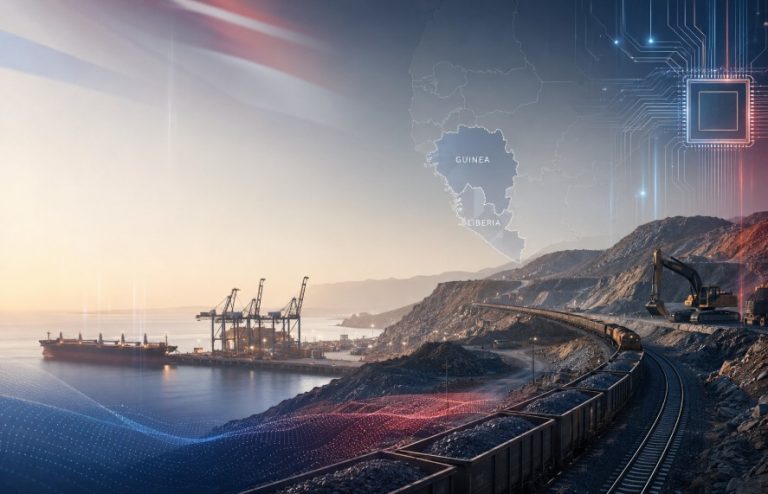
According to figures released by China’s government, Liberian exports to China exceeded US$200 million during the first three months of 2026, representing one of the fastest increases in bilateral trade between the two countries in recent memory.
The immediate explanation is straightforward.
Iron ore exports surged following the resumption of mining operations at the Bong and Bomi mines. Rubber exports also expanded significantly. Combined with China’s implementation of zero-tariff access for African countries maintaining diplomatic relations with Beijing, Liberian products are entering one of the world’s largest markets under exceptionally favorable conditions.
On paper, this is excellent news.
More exports mean more foreign exchange earnings, stronger trade flows, increased economic activity, and potentially greater investor confidence.
But the most important question is not how much Liberia exported during the first quarter.
The real question is what Liberia does with the opportunity.
Because access to a market is not the same thing as economic transformation.
History is filled with countries that enjoyed strong commodity demand without achieving meaningful structural change. Exports increased. Revenues rose. Trade volumes expanded. Yet the broader economy remained vulnerable because growth depended heavily on a small number of raw commodities.
Liberia has experienced this pattern before.
The current export surge is being driven primarily by iron ore and natural rubber—both important industries, but both largely situated at the lower end of the value chain. The products are extracted, harvested, or processed minimally before being shipped abroad.
The challenge is familiar.
How does Liberia move from exporting commodities to exporting value?
That distinction matters because countries rarely become prosperous by producing more of the same raw materials alone. They become more competitive when they process, manufacture, package, refine, and transform those resources before they leave their borders.
The difference between exporting iron ore and exporting steel products is significant.
The difference between exporting raw rubber and manufacturing finished industrial products is significant.
The difference between exporting agricultural commodities and exporting branded, processed goods is significant.
The greater the value added domestically, the greater the economic impact.
This is why China’s zero-tariff policy should be viewed as more than a trade advantage.
It should be viewed as a strategic window.
China remains one of the world’s largest consumer markets and one of the most important destinations for industrial inputs, agricultural products, and manufactured goods. Preferential access gives Liberia something many countries spend years negotiating to obtain.
The opportunity now is diversification.
The announcement that Liberian farmers are beginning to cultivate chili peppers for export to China may appear modest compared to iron ore shipments worth hundreds of millions of dollars. Yet it may ultimately represent something equally important.
A broader export base.
Diversified export economies are generally more resilient than commodity-dependent ones. They create opportunities across multiple sectors, distribute economic activity more widely, and reduce vulnerability to fluctuations in any single industry.
Agriculture is particularly important in this regard.
Unlike mining, agricultural value chains can generate economic activity across entire regions. Farmers, transporters, processors, warehouses, exporters, and small businesses all participate in the ecosystem. The benefits can therefore extend beyond concession areas and urban centers into rural communities where economic opportunities are often limited.
This is one reason the emerging China-Liberia trade relationship deserves attention beyond headline export figures.
The relationship is evolving.
What began primarily as a commodities trade is gradually expanding into agriculture, infrastructure, investment, technology, health cooperation, and industrial development. That broader engagement creates opportunities for Liberia to think beyond export volumes and focus on economic positioning.
The country’s objective should not simply be selling more products to China.
It should be becoming more competitive in the products it sells.
That requires investment in processing capacity, logistics systems, quality standards, export certification, industrial zones, agricultural productivity, and supply chain efficiency. It also requires identifying products where Liberia can develop sustainable competitive advantages rather than relying solely on favorable market access.
Because preferential access is valuable.
But competitiveness is permanent.
China’s commitment to simplifying customs procedures, expanding market access, and reducing trade barriers provides an important foundation. Yet no foreign market can substitute for domestic economic strategy.
Ultimately, Liberia’s success will depend on how effectively it converts trade opportunities into productive capacity at home.
The encouraging news is that the ingredients exist.
Natural resources. Agricultural potential. Strategic geography. Growing diplomatic relationships. Expanding market access. Rising global demand for commodities and agricultural products.
What remains is execution.
The first quarter’s US$200 million export performance demonstrates what is possible when favorable policies align with market demand.
The next challenge is ensuring that the growth is not merely larger.
But smarter.
Because the true measure of success will not be how much Liberia exports to China this year.
It will be whether the country uses today’s export boom to build a more diversified, resilient, and value-driven economy for the years ahead.