Liberia’s approval of Ivanhoe Atlantic’s Environmental and Social Impact Assessment (ESIA) marks more than regulatory progress—it signals a pivotal shift toward a multi-user rail framework long positioned as central to the country’s infrastructure strategy.
The clearance enables Phase One of the company’s transport and logistics development tied to the Kon Kweni iron ore project, advancing its planned use of Liberia’s rail and port network. More significantly, it positions Ivanhoe Atlantic as the first real entrant into a system designed to transition rail access from concession-controlled to state-regulated, multi-operator use.
Backed by the 2025 ratification of its Concession and Access Agreement, the project reflects growing alignment between government policy and private investment. At its core is the strategic Yekepa–Buchanan corridor—an asset now being tested as a shared infrastructure platform capable of supporting regional throughput.
The ESIA, developed to international standards, underscores a structured approach to environmental and social governance, while reinforcing investor confidence in Liberia’s regulatory processes. For stakeholders, this signals a maturing operating environment—one increasingly calibrated to global benchmarks.
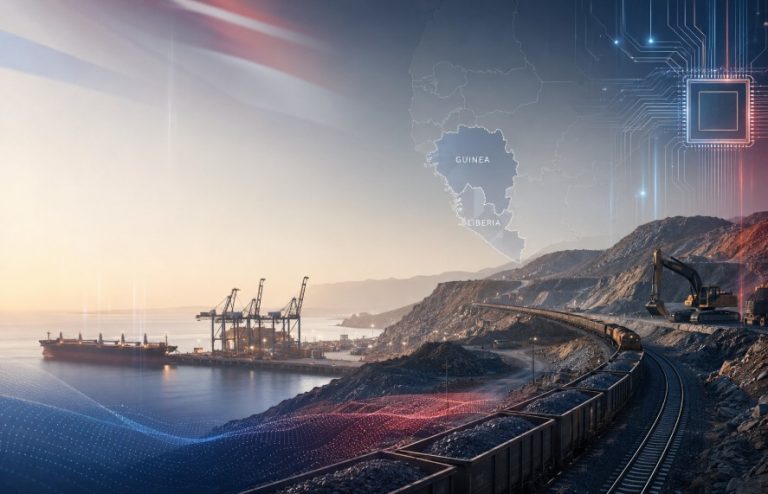
Operationally, Phase One will facilitate the export of high-grade iron ore from neighboring Guinea, positioning Liberia as a critical transit node within a cross-border mining ecosystem. Planned capacity expansion—from initial volumes of 2–5 million tonnes annually to as much as 30 million—highlights the scale of ambition and the transformative potential for both rail and port infrastructure.
Beyond throughput, the project carries tangible economic upside: job creation, supply chain expansion, and increased demand for logistics and ancillary services. Yet its broader significance lies in what it represents—a live test of Liberia’s ability to execute a transparent, multi-user access model under sovereign oversight.
As final cross-border approvals advance, the focus sharpens on execution. The question is no longer policy intent, but delivery.
If successful, this milestone will not only unlock a major resource corridor—it will redefine how infrastructure drives shared economic value in Liberia.