Ivanhoe Atlantic Inc., a U.S.-based mining company, has issued a firm rebuttal to statements made in a recent communication from U.S. Congressman John Moolenaar, Chairman of the House Select Committee on China, addressing what it describes as material inaccuracies with potential implications for investor perception and geopolitical positioning.
At the core of the dispute is a mischaracterization of Ivanhoe Atlantic’s corporate identity. The company emphasized that it is entirely separate from Ivanhoe Mines Ltd., a Toronto-listed entity, noting distinct ownership structures, management teams, and asset portfolios. The conflation, according to Ivanhoe Atlantic, led to misleading assertions regarding foreign—specifically Chinese—control or influence.
Clarifying Ownership and Governance
Ivanhoe Atlantic underscored its status as a privately held American company, majority-owned by I-Pulse Inc., and led by CEO Robert Friedland, a U.S. citizen with a long-standing track record in the global mining sector. The company maintains operational and corporate offices across key U.S. locations, including New York, New Mexico, and Michigan.
This clarification is particularly significant given the heightened scrutiny surrounding foreign influence in critical mineral supply chains—an issue increasingly shaping U.S. industrial policy and capital allocation.
Strategic Positioning: Countering China’s Mineral Dominance
The company’s response also highlights its broader strategic narrative: positioning itself as a Western-aligned alternative in the global race for critical minerals.
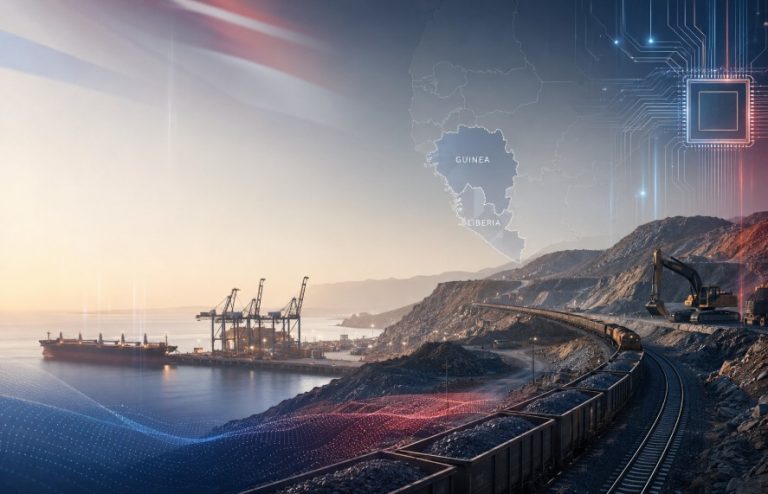
Ivanhoe Atlantic is currently advancing a high-grade iron ore project in Guinea, within the resource-rich Simandou region—an area widely viewed as central to future global steel supply. The company has explicitly committed to directing all production toward U.S. and allied markets, excluding Chinese buyers.
Equally notable is its infrastructure strategy. Ivanhoe Atlantic has stated it will not utilize the Trans-Guinean Railway—linked to Chinese-controlled operators—opting instead for logistics solutions aligned with U.S. national security and supply chain resilience objectives.
Alignment with U.S. Policy Priorities
Despite its criticism of the Congressman’s letter, the company signaled alignment with broader U.S. policy goals, particularly efforts to deepen commercial engagement in Africa and reduce dependence on Chinese-controlled mineral supply chains.
This positioning places Ivanhoe Atlantic squarely within a growing cohort of private-sector actors seeking to capitalize on geopolitical realignment in resource markets—where supply security is increasingly prioritized alongside cost efficiency.
Invitation for Oversight and Transparency
In a notable gesture, Ivanhoe Atlantic has invited members of the congressional committee to visit its operations in Guinea and Liberia. The move reflects an effort to reinforce transparency, validate its operational claims, and build credibility with policymakers amid rising geopolitical sensitivity around mining investments in Africa.
Investor Implications: Navigating Geopolitics in Resource Development
For investors, the episode underscores several emerging dynamics:
- Geopolitical risk is now central to valuation in the mining sector, particularly for critical minerals
- Supply chain alignment with U.S. and allied interests is becoming a competitive differentiator
- Narrative control and regulatory perception can materially impact capital access and partnerships
- West Africa’s strategic importance in global resource competition continues to grow
Outlook
As competition for critical minerals intensifies, companies operating in high-potential jurisdictions such as Guinea will increasingly be evaluated not only on asset quality, but also on geopolitical alignment and supply chain strategy.
Ivanhoe Atlantic’s response signals a proactive effort to position itself as a credible, U.S.-aligned player in this evolving landscape—while highlighting the reputational and strategic risks that can arise from mischaracterization at the policy level.