Minerals do not create wealth.
They create opportunity.
The distinction matters because history is filled with countries blessed with extraordinary geological resources that nevertheless struggled to translate them into broad-based prosperity. The value of a mineral deposit is determined not when it is discovered, but when institutions, capital and policy converge to develop it responsibly.
Liberia may now be approaching such a moment.
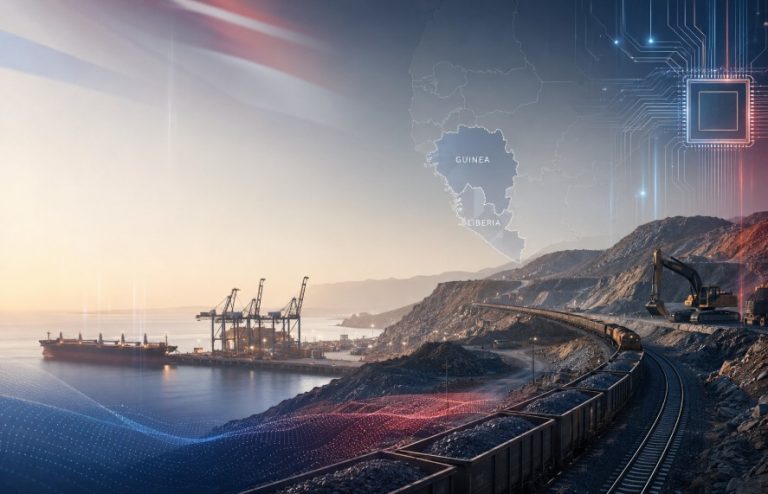
President Joseph Boakai’s announcement that recent geological assessments have identified commercially significant deposits of lithium, uranium, cobalt, manganese, neodymium and other critical minerals introduces a new dimension to Liberia’s economic story. Combined with estimates that these discoveries could attract as much as US$3 billion in investment, the findings position the country within one of the fastest-evolving segments of the global mining industry.
The timing is significant.
Global demand for critical minerals is being reshaped by forces far larger than commodity markets alone. Electric vehicles, battery storage, renewable energy infrastructure, advanced electronics and defence technologies are all increasing competition for minerals that only a handful of countries currently produce at scale.
In other words, the world is no longer searching only for iron ore and gold.
It is searching for the minerals that will power the next industrial era.
For Liberia, this represents both an opportunity and a strategic test.
Unlike traditional commodities, critical minerals occupy a central place in industrial policy, energy security and geopolitical competition. Governments are increasingly seeking diversified supply chains, while manufacturers are looking to reduce dependence on concentrated sources of production.
This changing landscape could create opportunities for emerging producers.
But geological potential alone is unlikely to attract billions of dollars.
Mining capital has become increasingly selective.
Investors evaluate jurisdictions not only by the quality of their resource base, but by the predictability of regulation, fiscal stability, environmental governance, permitting efficiency, infrastructure capacity and political risk. In an increasingly competitive global market, capital flows toward certainty.
That reality places governance at the centre of Liberia’s opportunity.
Should commercial quantities of these minerals be confirmed, the country will face decisions extending far beyond concession negotiations. Questions surrounding licensing frameworks, environmental standards, local content requirements, infrastructure planning, fiscal policy and downstream processing will shape whether Liberia captures lasting economic value or simply expands its portfolio of raw commodity exports.
The experience of other resource-rich economies offers a useful lesson.
Countries that derive the greatest long-term benefit from mining typically invest not only in extraction, but in the institutions that govern it. Transparent licensing systems, independent regulators, robust environmental oversight and predictable legal frameworks reduce uncertainty for investors while strengthening public confidence.
Equally important is infrastructure.
Critical mineral projects require reliable power, transport corridors, ports, telecommunications and skilled labour. Mining investment often catalyses these assets, but only where governments ensure they serve wider economic development rather than isolated extraction sites.
That principle is particularly relevant for Liberia.
The country has already begun repositioning itself through renewed investment in iron ore, expanding gold development and ongoing discussions around rail governance. The emergence of critical minerals would broaden that trajectory considerably, potentially transforming Liberia from a traditional mining jurisdiction into a more diversified supplier of strategic resources.
Yet diversification within mining should not be confused with diversification of the economy.
That distinction remains essential.
Natural resources can finance development, but they rarely substitute for it. Long-term resilience depends on using mining revenues to strengthen agriculture, manufacturing, logistics, education, energy and technology—sectors capable of generating growth long after individual mines cease production.
This is where policy choices become decisive.
The prospect of US$3 billion in investment is undoubtedly significant. It would represent one of the largest inflows of private capital in Liberia’s recent history and could accelerate infrastructure development, employment and export earnings.
But investment commitments should not become the endpoint of the conversation.
The more important questions are these:
How much value will remain in Liberia?
How will local enterprises participate?
Will new transport and energy infrastructure benefit the wider economy?
Will mining revenues strengthen public finances?
And can today’s discoveries become the foundation for tomorrow’s industrial competitiveness?
These questions are not obstacles to investment.
They are the conditions under which investment creates lasting national value.
Liberia’s mineral discoveries therefore represent more than a geological milestone.
They represent a strategic opportunity to redefine the country’s position within an increasingly competitive global economy.
Whether that opportunity becomes a catalyst for long-term transformation—or another chapter in Africa’s long history of exporting raw wealth—will depend less on what lies beneath Liberia’s soil than on the decisions made above it.
That is where the country’s greatest resource now lies.