Mining has always been a business of uncertainty.
For every commercially viable deposit discovered, countless exploration programmes end without success. Companies invest millions of dollars in geological surveys, geophysical mapping, drilling campaigns and laboratory analysis, often over many years, before determining whether a project is economically viable.
It is one of the mining industry’s greatest costs.
Increasingly, it is also one of its greatest opportunities for innovation.
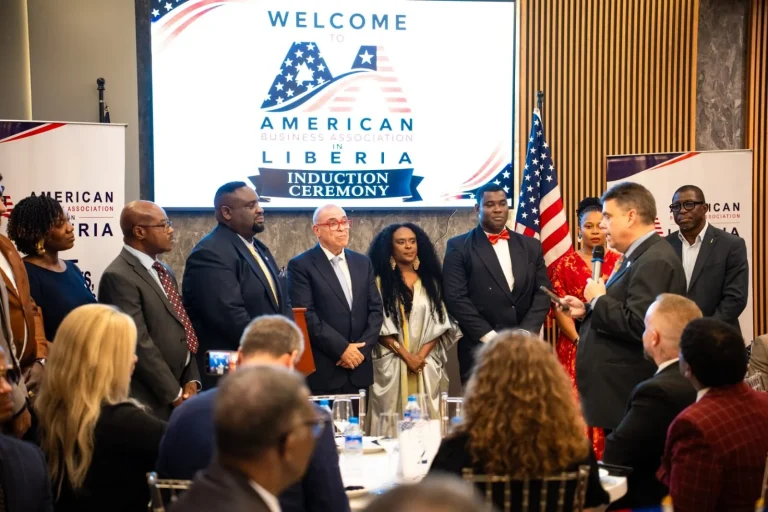
A forthcoming executive briefing in Monrovia, organised by GeoMining & Environmental Consultancy Inc. in partnership with InterGeo Minerals Intelligence Liberia (IMIL), reflects a broader transformation taking place across the global exploration industry. The event will showcase emerging technologies designed to improve the speed and precision of mineral discovery through advanced geospatial analytics, remote sensing and data-driven exploration models.
While the demonstration itself is technical, the implications extend well beyond geology.
The economics of mining are changing.
Traditionally, mineral exploration has relied on a sequential process of mapping, sampling, drilling and interpretation. It remains scientifically rigorous but also capital-intensive, time-consuming and inherently uncertain. Advances in computing power, satellite imaging, geospatial intelligence and predictive modelling are beginning to reshape that process by helping companies identify prospective targets with greater confidence before significant capital is committed in the field.
The objective is not to eliminate geological work.
It is to make it more informed.
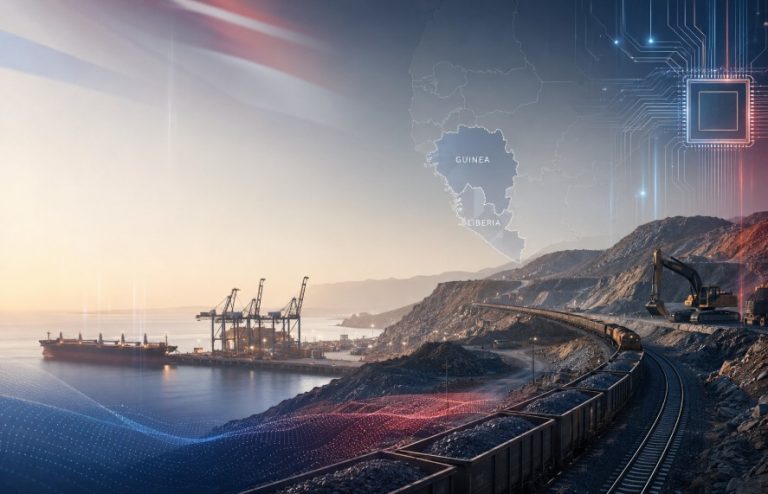
Across major mining jurisdictions, exploration companies are increasingly integrating digital technologies into early-stage decision-making. Artificial intelligence, machine learning, hyperspectral imaging, remote sensing and advanced geological datasets are becoming standard components of modern exploration programmes.
The result is not simply faster discovery.
It is more efficient capital allocation.
For investors, reducing exploration uncertainty improves project economics. For operators, it lowers unnecessary drilling costs and shortens development timelines. For governments, it has the potential to accelerate investment decisions while improving the quality of geological information available for national resource planning.
This matters for Liberia.
The country possesses considerable mineral potential, including iron ore, gold, diamonds and an emerging portfolio of critical minerals increasingly relevant to the global energy transition. Yet significant portions of Liberia’s geological landscape remain comparatively underexplored, reflecting both the cost of exploration and the limitations of historical geological data.
Technology alone will not change that reality.
But it can change the economics of exploration.
If advanced mineral intelligence systems enable companies to identify prospective deposits more efficiently, exploration risk declines. Lower risk can improve investment appetite, particularly among junior exploration companies and institutional investors seeking opportunities in frontier jurisdictions.
That relationship between technology and investment deserves greater attention.
Mining investment is rarely determined solely by commodity prices or geological potential. Investors evaluate the probability of success across every stage of a project’s life cycle—from exploration and permitting to construction and production. Technologies that improve confidence during the earliest stages can materially influence where exploration capital is deployed.
This is particularly relevant as global competition for exploration investment intensifies.
Countries across Africa are seeking to position themselves as destinations for the minerals underpinning the energy transition, advanced manufacturing and digital technologies. Geological potential remains essential, but increasingly it is accompanied by another consideration: the quality of data available to investors.
Reliable geological information has become an economic asset in its own right.
The discussions expected in Monrovia also raise a broader strategic question.
Should Liberia think beyond individual exploration projects and begin investing in a modern national mineral intelligence capability?
Many leading mining jurisdictions maintain sophisticated geological databases, digital mapping platforms and integrated resource information systems that reduce information asymmetry between governments and investors. Such systems improve licensing decisions, strengthen regulatory oversight and make exploration opportunities more transparent.
They also reduce one of the hidden costs of frontier investment: uncertainty.
If Liberia intends to compete for long-term exploration capital, strengthening its geological information infrastructure may prove just as important as reforming its mining legislation or modernising concession frameworks.
Technology transfer therefore deserves equal attention.
The value of advanced exploration systems extends beyond importing sophisticated tools. Long-term benefits emerge when domestic geologists, universities, regulators and technical institutions develop the expertise to use, interpret and manage those technologies independently.
That is how innovation becomes institutional capacity rather than a one-off demonstration.
Of course, expectations should remain measured.
No technology eliminates geological risk, and no predictive model can replace rigorous scientific verification. Commercial discoveries will continue to depend on drilling, resource estimation, engineering studies and market economics.
But innovation has consistently altered how industries operate.
Mining is no exception.
The significance of the Monrovia exhibition, therefore, lies less in the technologies being displayed than in the direction they represent.
Exploration is becoming increasingly digital.
Resource intelligence is becoming increasingly strategic.
And countries capable of combining geological potential with modern exploration capability are likely to compete more effectively for the next generation of mining investment.
For Liberia, that may prove to be the most valuable discovery of all—not beneath the ground, but in how the country chooses to understand it.