Africa Metallic Resources Inc. (AMR) has endorsed the Liberian government’s decision to accelerate development of the Putu Iron Ore asset, signaling a decisive shift from prolonged negotiation to execution.
The establishment of a dedicated implementation committee marks a clear inflection point for the project—one of Liberia’s most strategically significant but long-delayed mining opportunities. For investors, the move underscores growing policy alignment and urgency around unlocking high-value resource assets.
Recently selected as preferred developer following a competitive and transparent process, AMR has positioned itself at the center of a broader transformation in Liberia’s extractive sector—one that prioritizes local participation, value retention, and industrialization over traditional raw export models.
At the core of its strategy is downstream integration. Rather than exporting unprocessed ore, AMR aims to drive beneficiation, strengthen domestic supply chains, and expand fiscal returns—an approach increasingly favored in resource-rich emerging markets seeking structural economic gains.
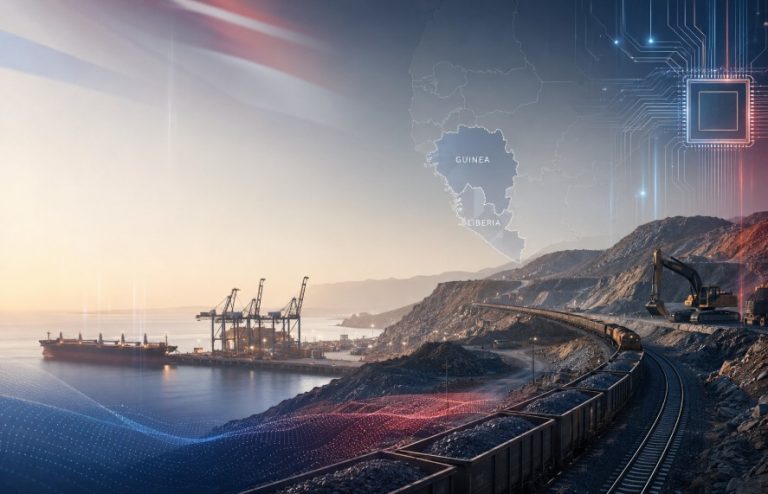
The projected impact is substantial: large-scale job creation, expanded infrastructure across transport and energy networks, and increased export capacity. Just as critical is the project’s financing and execution profile, backed by the Africa Finance Corporation (AFC) and supported by international technical partners—enhancing both bankability and delivery confidence.
AMR’s model also introduces a more inclusive ownership framework. With provisions for government equity participation and opportunities for broader Liberian shareholding, the structure signals a deliberate pivot toward shared economic benefit and national value capture.
In endorsing the government’s accelerated approach, AMR highlights a deeper shift in investment climate—one defined by stronger coordination, clearer policy direction, and increased emphasis on execution discipline.
If delivered effectively, the Putu project will extend beyond mining. It will stand as a benchmark for how Liberia leverages its natural resources to drive inclusive growth, attract aligned capital, and build long-term economic resilience.