Governments rarely invest a quarter of a billion dollars in technology companies without a strategic objective.
The United States’ decision to back I-Pulse with a US$250 million investment is no exception.
While the announcement centres on advanced scientific research and next-generation industrial technologies, it also reflects a much broader geopolitical reality. Control over critical technologies increasingly depends on secure access to critical minerals, advanced manufacturing capabilities and resilient supply chains.
Those three priorities are becoming inseparable.
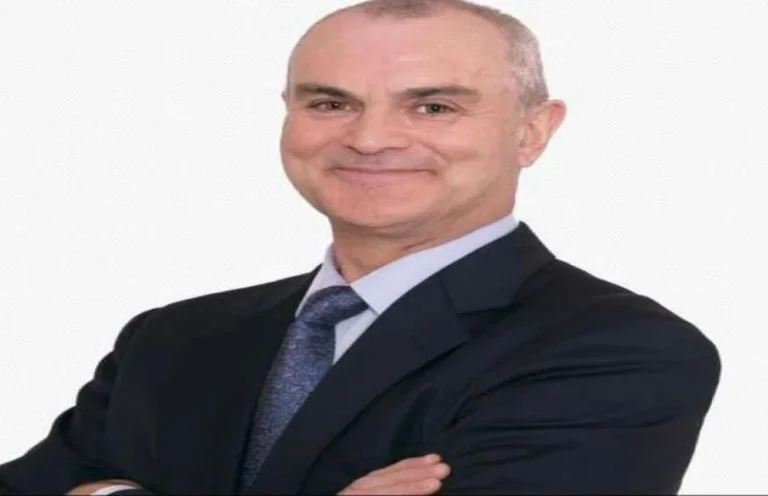
At the centre of the announcement is Robert Friedland, one of the mining industry’s most influential entrepreneurs. Over several decades, Friedland has built a reputation for identifying world-class mineral assets long before they become globally significant. His ventures have shaped major copper, nickel and energy-transition projects across multiple continents, making him one of the sector’s most closely watched figures.
His interests also extend to Liberia.
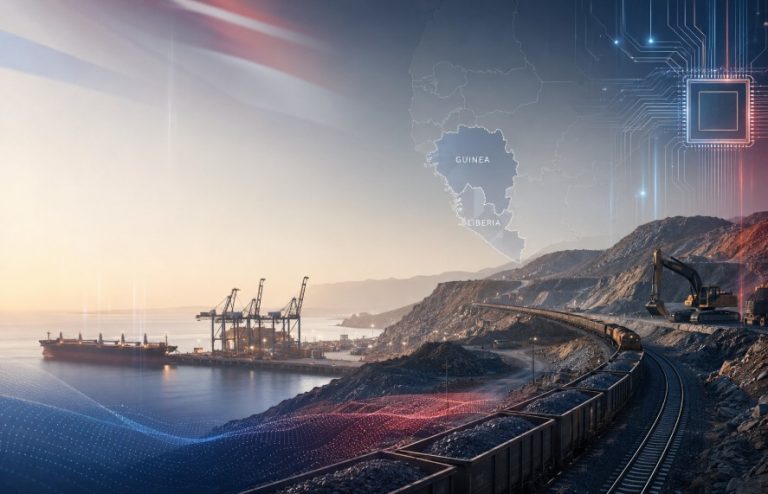
Through Ivanhoe Atlantic, Friedland has become a prominent participant in discussions surrounding Liberia’s rail infrastructure, iron ore logistics and the future of multi-user transport corridors. Those conversations have already positioned Liberia within a broader debate about infrastructure access, regional competitiveness and mineral development.
The latest US investment therefore deserves attention beyond its immediate financial value.
It illustrates how mining, technology and national security are becoming increasingly interconnected.
For much of the past century, natural resources were viewed primarily through a commercial lens.
Today, they are increasingly viewed through a strategic one.
Governments are no longer concerned only with securing commodity supplies. They are seeking to secure the technologies that transform those commodities into industrial advantage—from advanced electronics and defence systems to artificial intelligence, clean energy and semiconductor manufacturing.
That shift is redefining investment priorities.
The United States, China and the European Union are all directing unprecedented levels of public capital toward technologies capable of strengthening industrial resilience and reducing strategic dependence on overseas supply chains.
The investment in I-Pulse fits squarely within that framework.
For Liberia, the implications are subtle but important.
The country’s mineral sector is attracting growing international attention, not only because of established iron ore deposits but also because of increasing interest in critical minerals essential to the global energy transition and advanced manufacturing. Recent geological assessments suggest Liberia possesses a broader mineral endowment than previously understood, creating new opportunities for exploration and long-term investment.
That changing landscape means Liberia’s mining sector is no longer competing solely for private capital.
It is increasingly operating within a world where geopolitical considerations influence investment decisions alongside commercial fundamentals.
This raises a broader strategic question.
As global powers compete for access to critical resources and industrial technologies, how should Liberia position itself?
The answer extends beyond negotiating concession agreements.
Long-term competitiveness will depend on building transparent institutions, modern infrastructure, reliable regulatory systems and a policy framework capable of attracting multiple sources of investment without becoming overly dependent on any single geopolitical partner.
Strategic neutrality, supported by institutional strength, may become one of Liberia’s most valuable economic assets.
The timing is also notable.
The US announcement follows renewed momentum across Liberia’s mining sector, including large-scale investment commitments, legislative reforms and increased exploration activity. While these developments are not directly connected, together they reflect a mining industry entering a period of renewed strategic relevance.
For investors, this convergence matters.
Mining projects are no longer evaluated solely by production forecasts and commodity prices. Increasingly, they are assessed through the lens of supply-chain security, industrial policy and geopolitical resilience.
Capital is following strategy as much as geology.
That does not guarantee that every project will succeed.
Nor does it imply that every investment carries geopolitical intent.
But the direction of travel is unmistakable.
Natural resources are becoming central to national competitiveness once again.
For Liberia, that reality presents both opportunity and responsibility.
The country possesses assets that global markets increasingly value. The challenge is ensuring that those assets are governed with the transparency, predictability and long-term vision required to convert strategic interest into sustainable economic development.
Washington’s investment in Robert Friedland’s latest venture is therefore about more than one company.
It is another signal that the competition for the industries of the future has already begun.
And countries rich in natural resources will increasingly find themselves at the centre of that competition—not simply as suppliers of minerals, but as strategic partners in a rapidly changing global industrial order.